The Great Seal of the United States
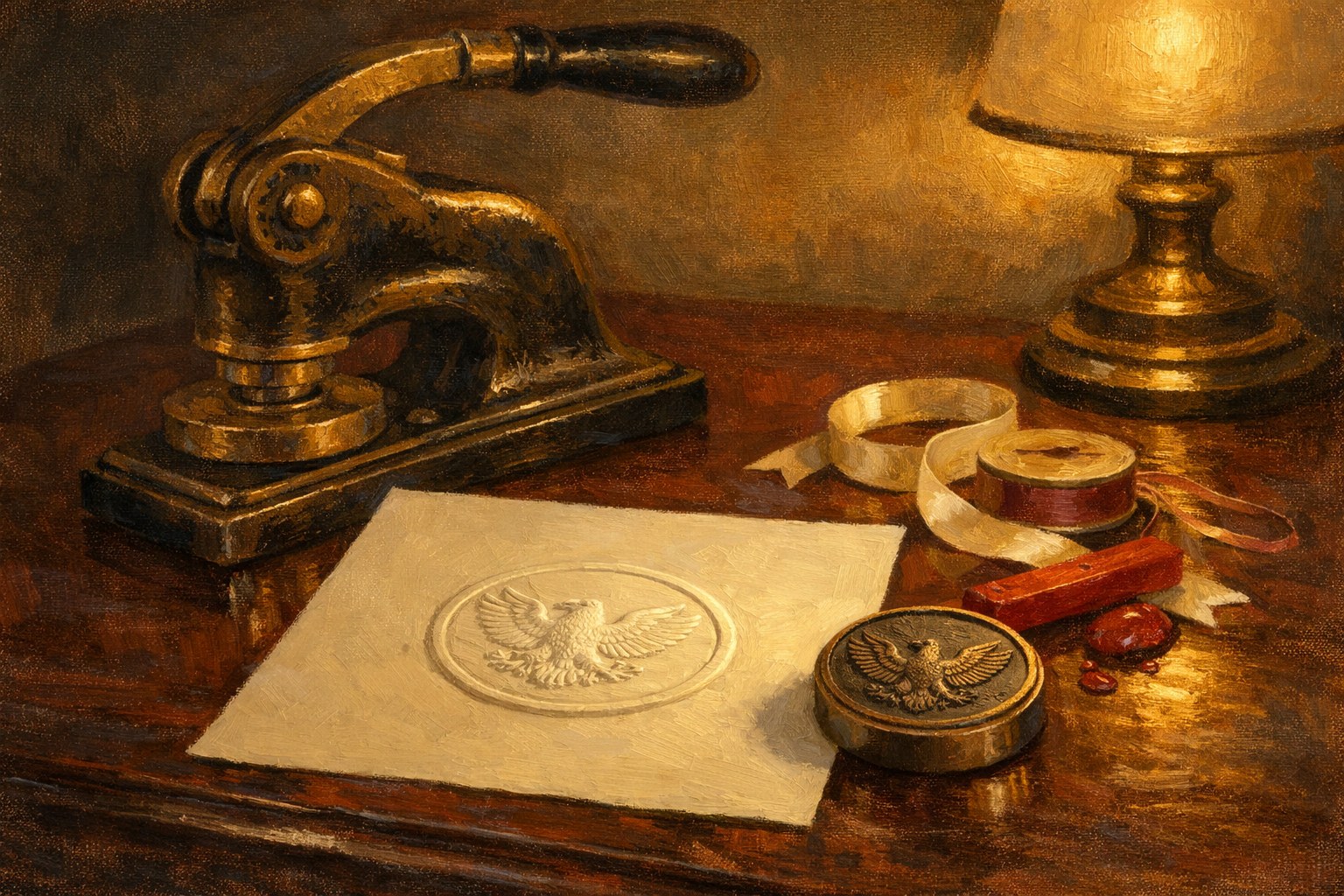
On July 4, 1776, the Continental Congress appointed Benjamin Franklin, John Adams, and Thomas Jefferson to design a seal for the new nation. Their ideas and those of two later committees were combined by Charles Thomson, secretary of Congress, and adopted on June 20, 1782. The front shows a bald eagle holding an olive branch and a bundle of 13 arrows, with a shield on its chest and a scroll reading E pluribus unum, out of many, one. The back shows an unfinished pyramid under an eye in a triangle.
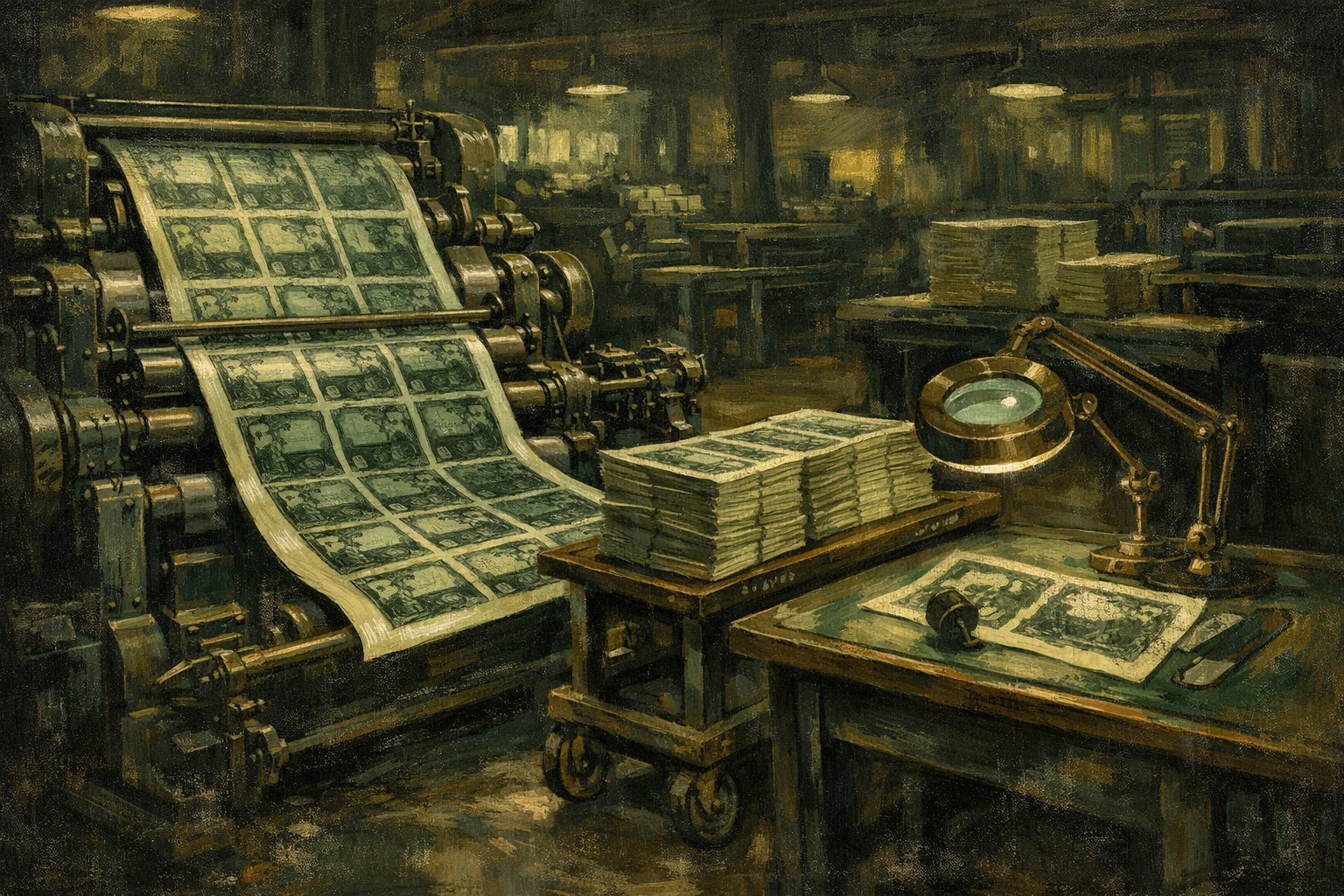
The seal is used to authenticate the President's signature on important documents, such as treaties, proclamations, commissions of ambassadors and Cabinet officers, and warrants for receiving foreign envoys. The Secretary of State is its custodian, and a die of the front is kept in the State Department, where staff impress it on documents thousands of times a year. Both sides have appeared on the back of the one dollar bill since 1935, and versions of the eagle appear on passports, uniforms, and federal buildings.
The seal is often confused with the Presidential Seal and the seals of departments, which are separate. Its symbols have been studied and sometimes mythologized, especially the pyramid and eye, which the designers described as signs of strength and of providence watching over the nation. Federal law makes it a crime to use the seal falsely to suggest government approval. The bald eagle on the seal became the official national bird in a law signed in December 2024.
| Status | Active |
| Legal basis | 4 U.S.C. 41 to 42 |
| Official site | state.gov |
| Adopted | June 20, 1782 |
| Motto | E pluribus unum (out of many, one) |
| Custodian | Secretary of State |
| Used on | Treaties, proclamations, commissions |
| On the dollar bill | Since 1935 |
| Date | Adopted June 20, 1782 |