The Flag Code
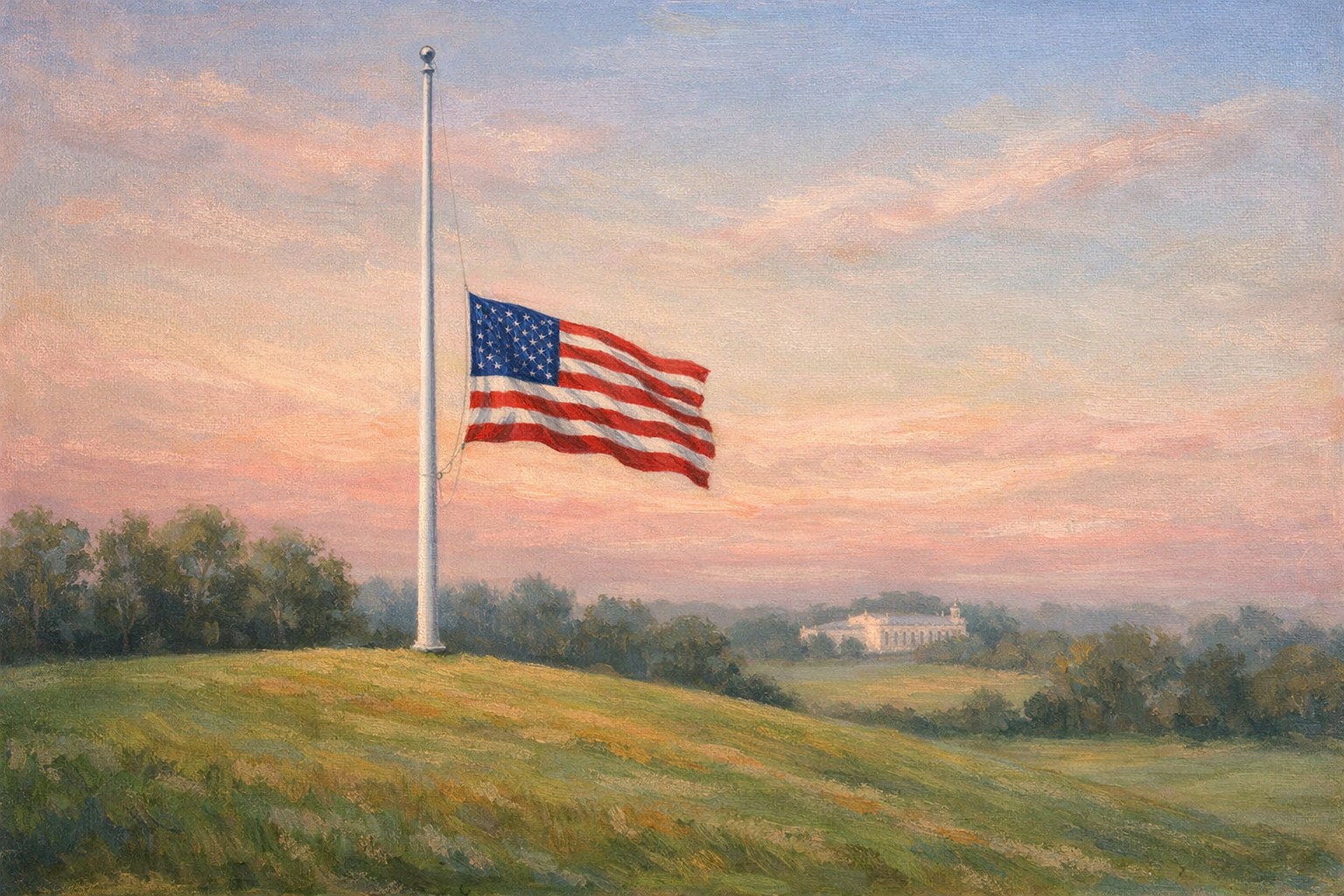
The Continental Congress adopted the Stars and Stripes on June 14, 1777, now Flag Day. New stars were added for new states, and the current 50-star flag became official on July 4, 1960, after Hawaii joined the Union. Rules for handling the flag were drawn up by patriotic groups at National Flag Conferences in 1923 and 1924 and written into federal law on June 22, 1942. Congress revised them in 1976, and they are found in Title 4 of the U.S. Code.
The code says the flag should be flown from sunrise to sunset unless lighted, should never touch the ground or be used as clothing or advertising, and when worn out should be destroyed in a dignified way, preferably by burning. It sets the order for flying it with other flags and how civilians should salute. Only the President, for the nation, and governors, for their states, can order flags flown at half-staff, as on Memorial Day mornings, Peace Officers Memorial Day, and after the deaths of leaders and national tragedies.
The code sets no penalties and is advice for civilians, although it binds federal agencies. In Texas v. Johnson in 1989 and United States v. Eichman in 1990 the Supreme Court held that burning a flag as political protest is protected by the First Amendment, and proposed constitutional amendments to allow a ban have failed in the Senate. An August 25, 2025, executive order directed prosecutors to pursue flag burning when it also breaks other laws, such as rules on property or public order, which critics said was meant to chill protected protest.

| Status | Active |
| Legal basis | 4 U.S.C. 1 to 10 |
| Official site | law.cornell.edu |
| Flag adopted | June 14, 1777 |
| 50-star flag | Since July 4, 1960 |
| Code enacted | June 22, 1942 |
| Half-staff orders | President or governors |
| Flag burning | Protected protest under Texas v. Johnson (1989) |
| Date | Written into law June 22, 1942 |