The National Anthem
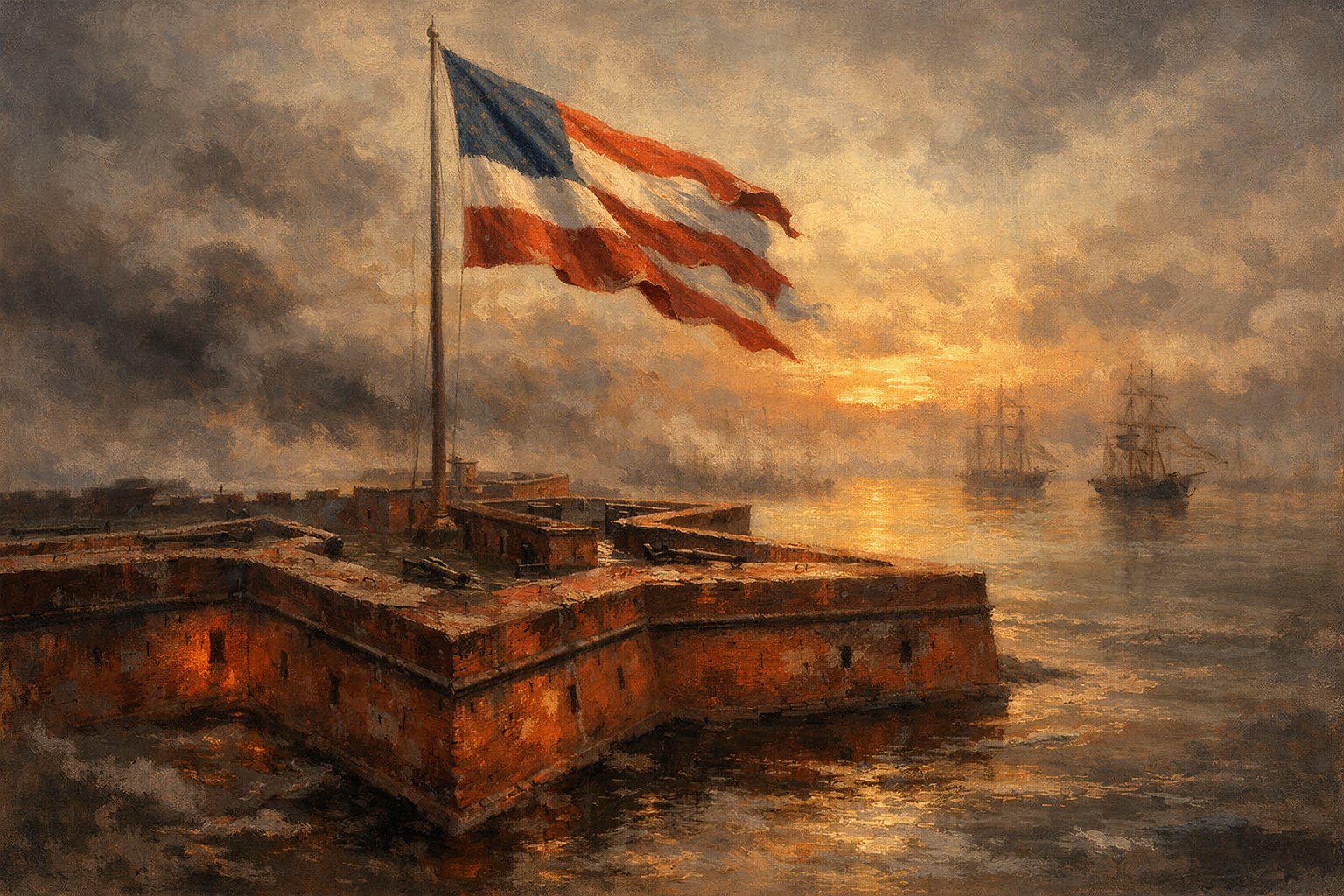
Francis Scott Key wrote the poem Defence of Fort McHenry after watching the British bombard the fort in Baltimore harbor on September 13 and 14, 1814, and seeing the American flag still flying at dawn. Set to a popular British tune, it became known as The Star-Spangled Banner. The Navy adopted it for official use in 1889 and President Wilson in 1916, and Congress made it the national anthem by a law signed March 3, 1931.
Federal law says those present should stand at attention facing the flag, with civilians placing a hand over the heart and members of the military saluting, but sets no penalties. Related symbols include the national motto, In God We Trust, adopted in 1956, and the Pledge of Allegiance, written in 1892, recognized by Congress in 1942, and changed to add under God in 1954. In West Virginia v. Barnette in 1943 the Supreme Court ruled that public schools cannot force students to salute the flag or recite the pledge.
The anthem has been a stage for protest, from athletes raising fists at the 1968 Olympics to players kneeling during the anthem at NFL games starting in 2016, which drew strong reactions from fans and political leaders. Supporters of the protests say they are exactly the free expression the flag stands for, while critics see them as disrespectful to the country and its veterans. The third verse, rarely sung, has been criticized for a line about slaves, and some have proposed other songs as the anthem.

| Status | Active |
| Legal basis | 36 U.S.C. 301 |
| Official site | nps.gov |
| Written | September 1814 |
| National anthem since | March 3, 1931 |
| Motto | In God We Trust, since 1956 |
| Pledge recognized | 1942, under God added 1954 |
| Key case | West Virginia v. Barnette (1943) |
| Date | Made the national anthem March 3, 1931 |
| Location | Fort McHenry, Baltimore, Maryland |