International Organizations in the United States: the UN, IMF, World Bank, and More
Key takeaways
- The United States hosts more major international organizations than any other country, including the UN in New York and the IMF, World Bank, Organization of American States, Inter-American Development Bank, and Pan American Health Organization in Washington.
- The U.S. holds a veto in the UN Security Council and enough votes at the IMF and World Bank to block major decisions, and by tradition an American leads the World Bank.
- A 1945 law gives these organizations and their staff legal immunities, narrowed by the Supreme Court in 2019, and a 1947 treaty requires the U.S. to admit UN delegates.
- The U.S. pays 22 percent of the UN regular budget but owed nearly 4 billion dollars in early 2026.
- Since 2025 the U.S. has left the World Health Organization and the UN Human Rights Council, announced it will leave UNESCO, and in January 2026 ordered withdrawal from 66 international bodies.
- Supporters of the pullback cite cost and bias, while critics warn of lost influence to China.
After World War II the United States led the creation of a new system of international institutions and invited many of them to set up on American soil. New York became home to the United Nations, and Washington to the main global financial institutions and the leading organizations of the Americas.
This guide explains which organizations are here, how the United States votes and pays in them, the special legal rules that apply, and the recent shift away from many of them.
The International Organizations Immunities Act of 1945 lets the President grant organizations legal immunity from lawsuits and protect their property and archives, and gives their officials immunity for official acts. In 2019 the Supreme Court ruled that this immunity is the narrower kind foreign governments now have, so organizations can be sued over commercial activities. Foreign staff hold special G-4 visas. Under the Headquarters Agreement the U.S. must issue visas to UN delegates, but it has refused some on security grounds, from Yasser Arafat in 1988 to Palestinian officials in 2025, drawing protests from other members.
The United States is assessed 22 percent of the UN regular budget, the maximum share, and about a quarter of peacekeeping costs, though U.S. law caps peacekeeping payments at 25 percent. It also gives large voluntary contributions to UN agencies. By early 2026 the United States owed nearly 4 billion dollars in unpaid UN dues, made a partial payment of about 160 million dollars in February, and the UN cut its budget and staff. Congress appropriates U.S. contributions, and quota increases at the IMF and World Bank require congressional approval.
The IMF lends to countries in financial crisis and monitors the world economy, while the World Bank Group lends and invests in developing countries. Votes depend on each country's financial share. The United States holds about 16.5 percent of IMF votes and about 15.5 percent at the main World Bank lender, enough to block decisions that need 85 percent. The Treasury Secretary is the U.S. governor of both. By tradition the World Bank president is an American and the IMF managing director a European.
At the end of World War II the United States was the world's leading economic and military power and wanted the new institutions close at hand. The 1944 Bretton Woods conference placed the International Monetary Fund and the World Bank in Washington, and the United Nations chose New York in 1946. Washington also hosts the Organization of American States, the Inter-American Development Bank, and the Pan American Health Organization, the oldest international health agency. These organizations employ thousands of people and bring diplomats, conferences, and spending to both cities.
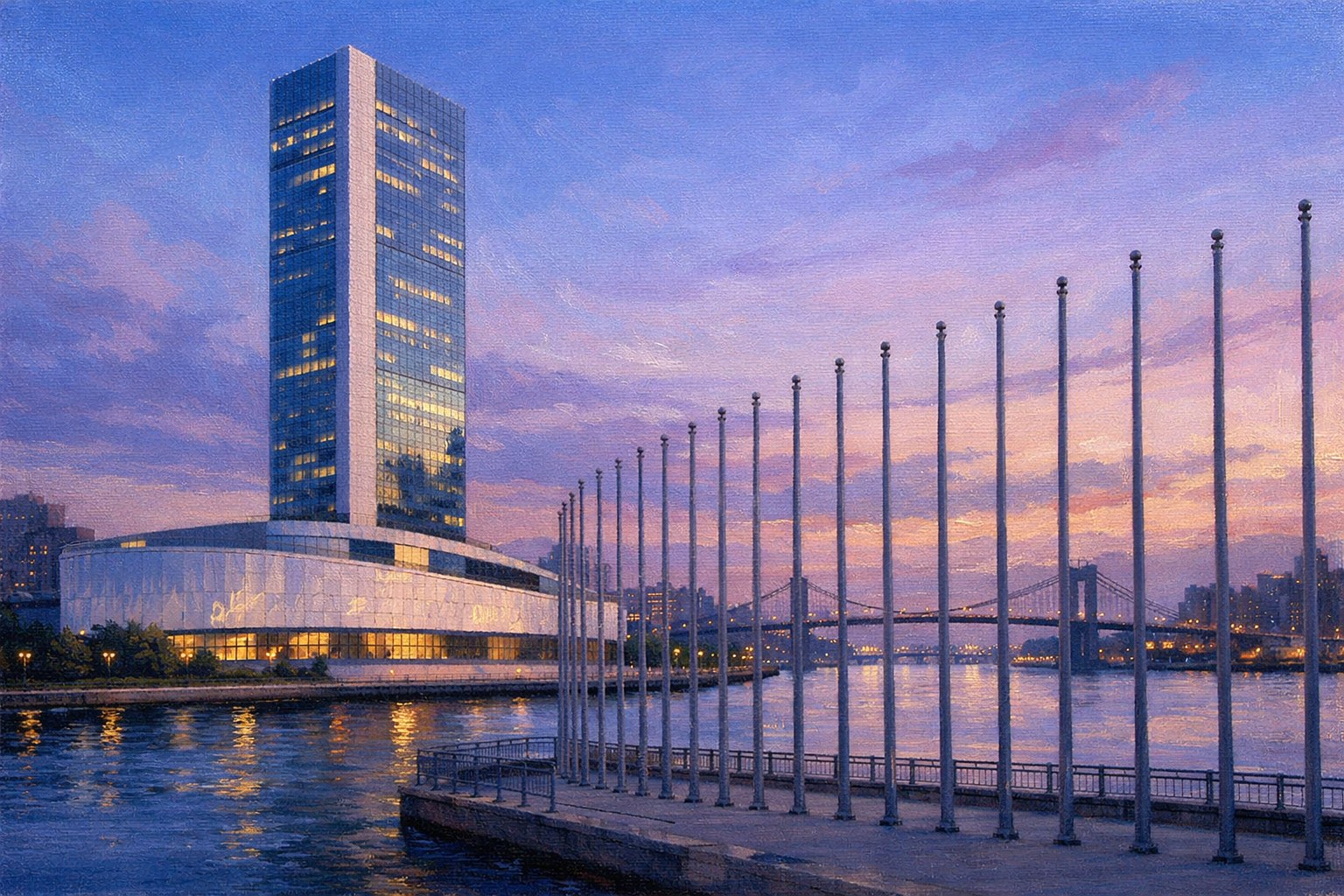

The UN's 193 members meet in the General Assembly each September, when world leaders come to New York. The 15-member Security Council can impose sanctions and authorize force, and the United States is one of five permanent members with a veto. The U.S. ambassador to the UN leads the U.S. mission across the street from headquarters. A 1947 Headquarters Agreement makes the UN district part of the United States but under UN control and requires the U.S. to let delegates travel to it.

In 2025 the United States withdrew from the World Health Organization, effective January 2026, left the UN Human Rights Council, cut funding for the UN agency for Palestinian refugees, and announced it would leave UNESCO at the end of 2026. In January 2026 it ordered withdrawal from 66 international bodies, including 31 UN entities such as the UN climate change convention and UN Women. It stayed in the IMF and World Bank. Supporters say many organizations are wasteful, biased, or hostile to U.S. interests. Critics say leaving gives China and others more influence and weakens institutions the United States built, and some question whether the President can leave treaty bodies without Congress.
See how treaties and withdrawals work in how treaties work, how foreign aid is organized in foreign aid explained, or American diplomats abroad in America's diplomats.