Congressional Press Galleries
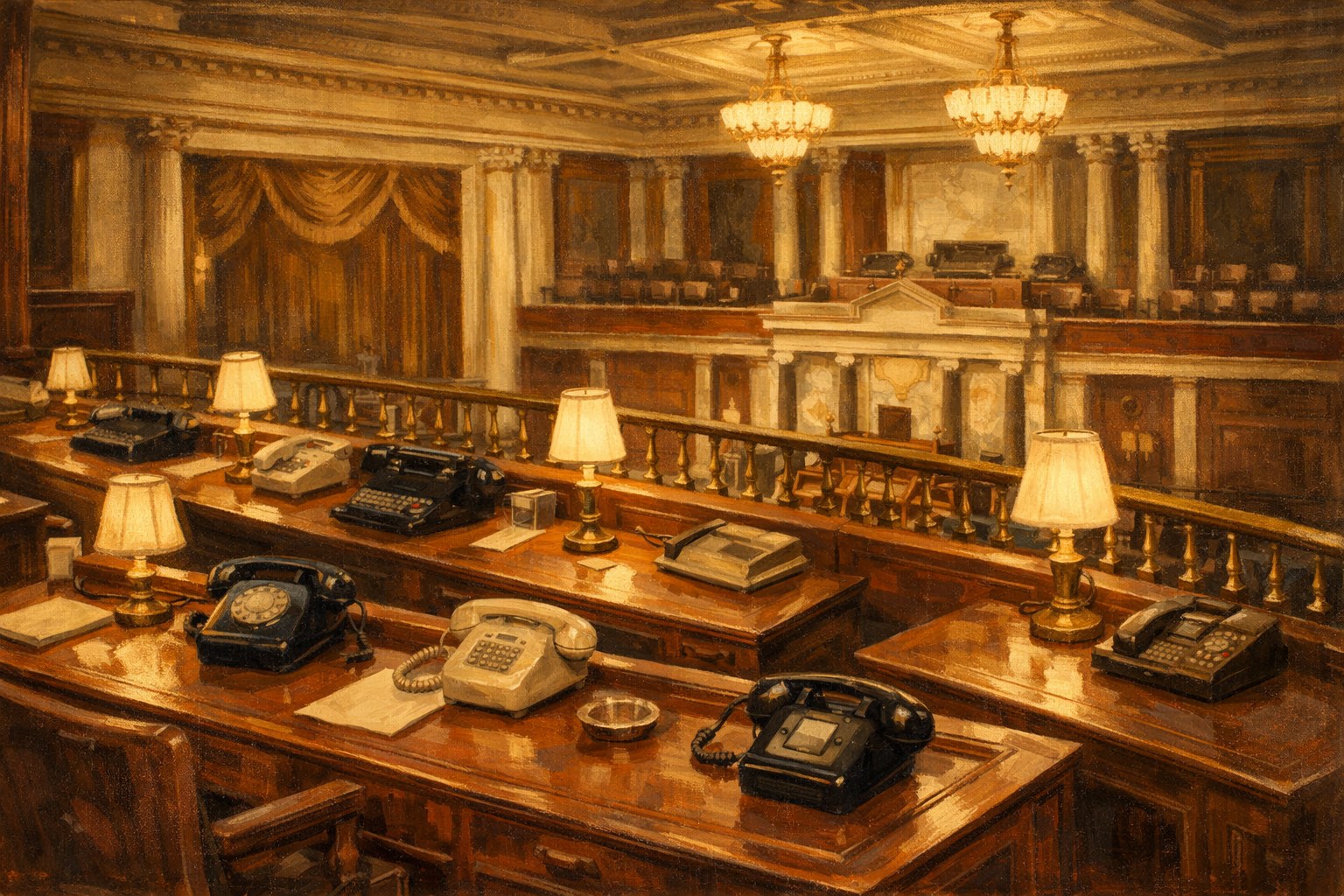
Reporters have watched congressional debates from galleries above the House and Senate floors since the early republic. In 1879 Congress agreed that a Standing Committee of Correspondents, elected by the reporters themselves, would decide who qualifies for credentials, an unusual system of self-regulation that keeps politicians from choosing which journalists can cover them. Today there are separate galleries for daily newspapers and wire services, periodicals, radio and television, and photographers in each chamber.
Accredited journalists get seats in the press galleries overlooking each chamber, workspace in the Capitol, and access to the hallways and areas outside the chambers where members are often questioned on the way to votes. Gallery staff, employed by the House and Senate, keep reporters informed about the schedule and votes. Credentials require working for an independent news organization rather than a lobbying group, party, or government.
The galleries have had to decide how to treat bloggers, online outlets, and partisan media, and some lawmakers have proposed taking more control over credentials, while press groups defend the self-governing system. Hallway interviews give Congress an unusually open relationship with the press compared with the executive branch, but members and staff sometimes restrict access in sensitive moments, such as after January 6, 2021. Cameras on the floor are controlled by each chamber, not by the networks.
| Status | Active |
| Legal basis | House Rule VI and Senate Rule XXXIII |
| Official site | dailypress.senate.gov |
| Self-regulation since | 1879 |
| Credentials decided by | Standing Committees of Correspondents |
| Galleries | Daily press, periodical, radio and TV, photographers |
| Staffed by | House and Senate employees |
| Requirement | Work for an independent news organization |
| Date | Reporters credential themselves since 1879 |
| Location | U.S. Capitol, Washington, D.C. |