The Power Grid and Who Keeps It Running
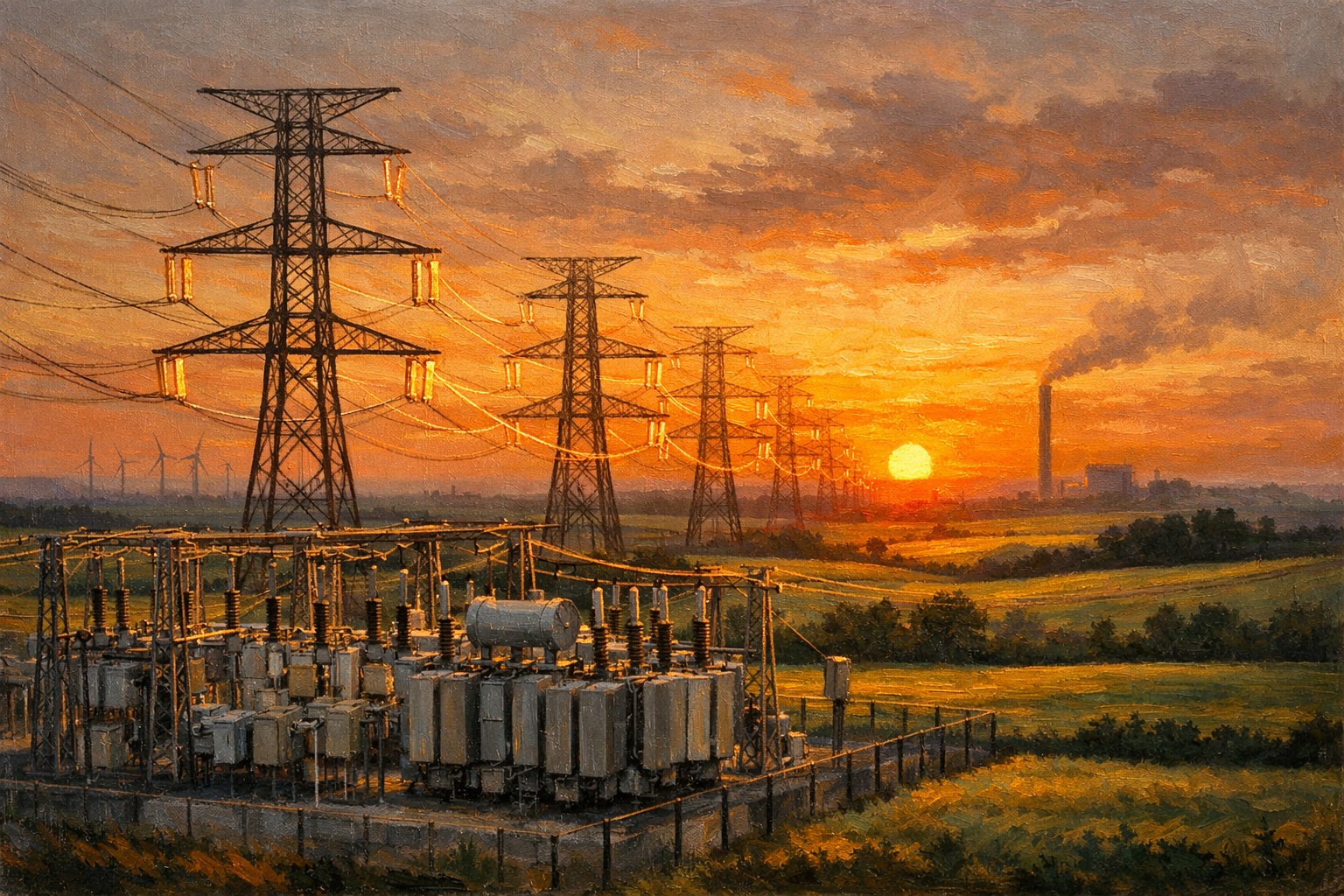
The continental United States has three main grids: the Eastern Interconnection, the Western Interconnection, and most of Texas, run separately by ERCOT. Power is produced by thousands of plants and delivered by about 3,000 utilities, some owned by investors, some by cities, and some by member cooperatives. In about two thirds of the country, regional transmission organizations such as PJM and MISO run the grid and wholesale markets.
The Federal Energy Regulatory Commission oversees interstate transmission and wholesale power sales, while states regulate retail rates, approve power plants, and set clean energy goals. After a 2003 blackout left about 50 million people without power, the Energy Policy Act of 2005 made reliability standards mandatory, enforced by the North American Electric Reliability Corporation under FERC. Texas's grid is mostly outside FERC's reach, and the February 2021 winter storm that knocked out its power led to more than 240 deaths.
After decades of flat demand, electricity use is rising quickly, driven by data centers for AI, factories, and electrification, and grid planners warn of shortfalls during heat waves and cold snaps. In 2025 the Energy Department used emergency powers to order several coal and gas plants slated for retirement to keep running, FERC began writing rules for connecting very large customers such as data centers, and electricity prices rose faster than inflation in many regions. Debates center on who pays for new power lines and plants, how fast to build them, and the mix of fuel sources.
| Status | Active |
| Legal basis | 16 U.S.C. 824o (reliability) |
| Official site | ferc.gov |
| Main grids | Eastern, Western, and Texas (ERCOT) |
| Utilities | About 3,000 |
| Federal regulator | FERC, with NERC reliability standards |
| 2003 blackout | About 50 million people affected |
| Retail rates | Set by states |
| Date | Mandatory reliability standards since the Energy Policy Act of 2005 |