Military Ranks and Promotions
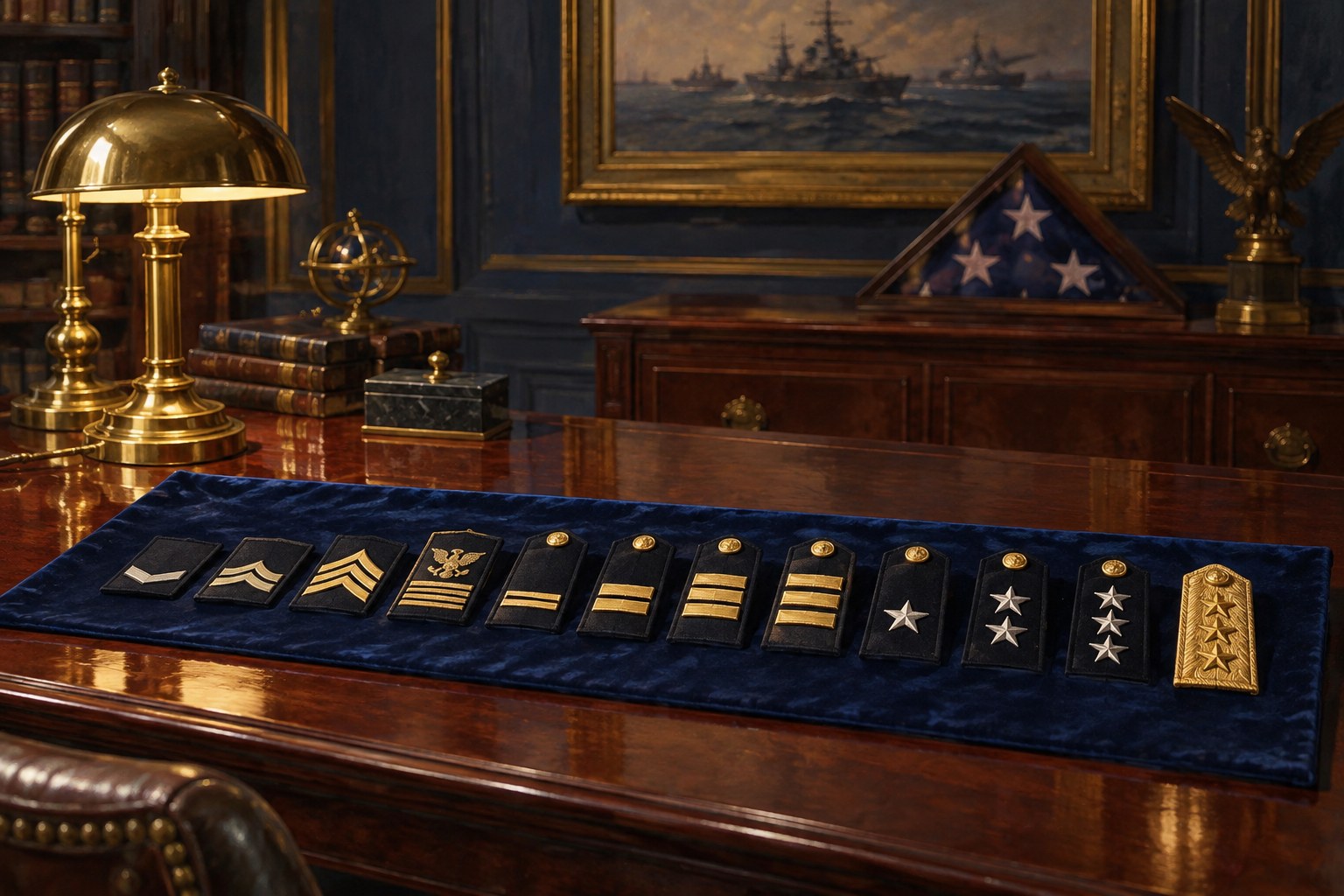
Military personnel fall into three groups. Enlisted members, from privates and seamen to sergeants major and master chief petty officers, hold pay grades E-1 through E-9 and make up about 80 percent of the force. Warrant officers, W-1 to W-5, are technical specialists such as helicopter pilots. Commissioned officers, from second lieutenants and ensigns at O-1 to four-star generals and admirals at O-10, lead units and hold command. Officers enter through the service academies, Reserve Officers' Training Corps programs at colleges, or officer candidate schools. Pay is set by grade and years of service in a single table for all services.
Under Article II, officers are appointed by the President with the advice and consent of the Senate, so every commissioned officer's promotion goes to the Senate, almost always in large lists approved by unanimous consent. Promotion boards of senior officers rank candidates against their peers, and the Defense Officer Personnel Management Act of 1980 created an up-or-out system in which officers passed over twice must generally leave. Three- and four-star ranks are tied to specific positions and lapse when officers leave them. Enlisted promotions are handled within each service by tests, time in grade, and boards, without the Senate.
In 2023 a senator's blanket hold over a Defense Department abortion travel policy delayed hundreds of general and flag officer promotions for most of the year, leaving several services without confirmed chiefs until the hold was lifted in December. In 2025 the Secretary of Defense removed the Chairman of the Joint Chiefs and other senior officers and ordered a 20 percent cut in four-star positions, steps supporters called overdue trimming of a top-heavy force and critics called a politicization of the officer corps. Congress caps the number of generals and admirals by law, and members of both parties have proposed reducing the senior ranks.



| Status | Active |
| Legal basis | Article II appointments clause and the Defense Officer Personnel Management Act of 1980 |
| Official site | defense.gov |
| Enlisted grades | E-1 to E-9 |
| Warrant officer grades | W-1 to W-5 |
| Officer grades | O-1 to O-10 |
| Senate role | Confirms every officer promotion |
| Promotion system | Up or out, under the 1980 DOPMA law |
| Date | Up-or-out system set December 12, 1980 |