Myths About Presidential Power

Key takeaways
- The President alone can order the use of nuclear weapons. No other official must approve, though officers must refuse orders they believe are clearly illegal.
- Gas prices are set mostly by the world oil market. The President can nudge them through the Strategic Petroleum Reserve, fuel waivers, leasing, and sanctions, but cannot set them.
- The President has broad power to bar classes of noncitizens and to limit ports of entry, but cannot keep U.S. citizens out or erase protections Congress wrote into immigration law.
- No law authorizes martial law. The Insurrection Act allows troops at home only in narrow circumstances, and courts and Congress keep the final say.
- The President cannot cancel or postpone a federal election or be elected to a third term. Congress sets Election Day, the states run the vote, and the Twentieth and Twenty-second Amendments fix the end of the term.
- Executive orders direct the executive branch. They are not laws, and courts strike down orders that exceed the President's authority.
Presidents are the most visible figures in American government, and many people assume they have more power than they do, or less. This guide takes six questions people often ask and answers each with what the Constitution, federal statutes, and court rulings provide.
Each section links to the entries that explain the underlying law in full. Where a question is still debated, the guide sets out the main arguments on each side without a verdict.
No. Laws are passed by Congress and signed by the President, or enacted over a veto. An executive order is a written directive from the President to officials of the executive branch, published in the Federal Register, and it must rest on authority from the Constitution or a statute. Orders can carry real force, telling agencies how to enforce laws, write rules, or spend money, and a new President can revoke a predecessor's orders at once. Courts can block orders that exceed the President's authority, as the Supreme Court did with President Truman's seizure of the steel mills in 1952, and Congress can override an order by passing a law. Supporters of frequent orders say they let Presidents act when Congress will not, while critics say they bypass the legislative process.


No to both. The Constitution gives Congress the power to set the day presidential electors are chosen, and federal law since 1845 has fixed it as the Tuesday after the first Monday in November. Congress set the same day for House and Senate elections, and states and counties run the voting. Elections went ahead during the Civil War and both world wars. Whatever happens, the Twentieth Amendment ends the President's term at noon on January 20. A March 2025 executive order directing a proof of citizenship requirement on the national voter registration form was blocked in court. The Twenty-second Amendment bars anyone from being elected President more than twice, and proposals to change it, including a 2025 resolution, have not advanced. Scholars debate whether a two-term President could return through the vice presidency.


No, though Presidents can influence them at the margins. The largest part of the price at the pump is the cost of crude oil, set on a world market shaped by global demand, the OPEC+ producers, wars, and sanctions. Refining, distribution, and taxes make up the rest, and the federal gasoline tax of 18.4 cents a gallon, set by Congress, has not changed since 1993. A President can order releases from the Strategic Petroleum Reserve, let the EPA waive seasonal fuel rules, shape drilling on federal lands and waters through leasing, and tighten or ease sanctions on oil exporters. The FTC can investigate price manipulation and review oil company mergers. Economists generally find that these tools move pump prices by cents rather than dollars, and with a lag.





No statute authorizes martial law, the replacement of civilian government and courts by military rule. In Ex parte Milligan in 1866 the Supreme Court held that civilians cannot be tried by military courts where civilian courts are open, and in 1946 it ruled that military trials in Hawaii, placed under martial law after Pearl Harbor, had been unlawful. What the President does have is the Insurrection Act of 1807, which allows use of the armed forces at home to suppress insurrection or enforce federal law when ordinary means fail, the main exception to the Posse Comitatus Act. The power to suspend habeas corpus appears in Article I, and most scholars read it as belonging to Congress, though Abraham Lincoln suspended it on his own in 1861. The 2025 Guard deployments to American cities relied on other laws, and in December 2025 the Supreme Court refused to allow a deployment in Illinois.
Largely yes. Since the Atomic Energy Act of 1946 placed nuclear weapons under civilian control, Presidents have held sole authority to order their use. A military aide carrying the emergency satchel, called the football, stays near the President, who authenticates an order with codes on a card called the biscuit. No approval from the Secretary of Defense, Congress, or anyone else is legally required, though launch crews act in pairs and officers are obliged to refuse orders they believe are clearly illegal. Bills to require a declaration of war before any first use have not passed. Supporters say speed and credibility make deterrence work, while critics say no single person should hold that power.



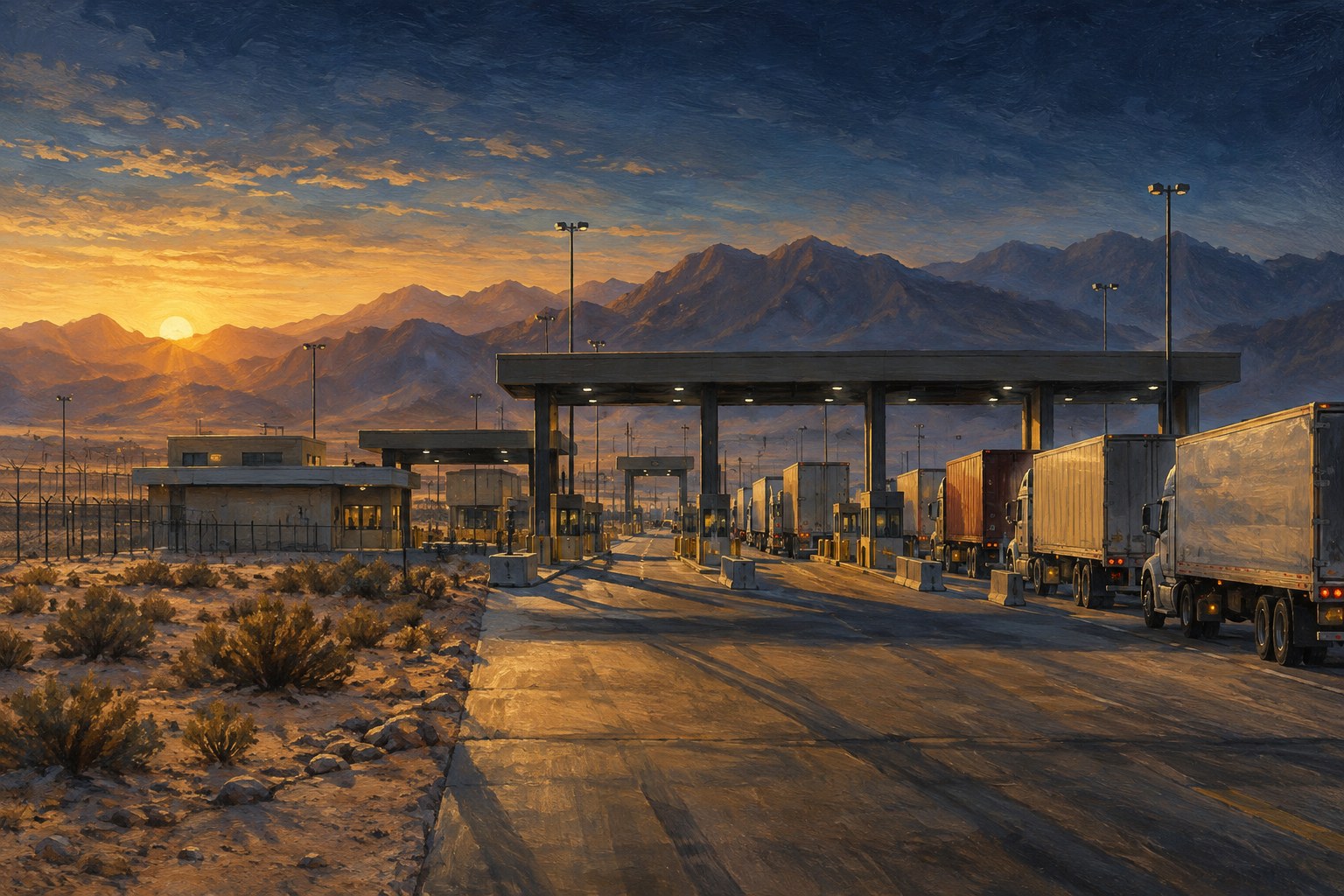
Partly. Section 212(f) of the Immigration and Nationality Act lets the President suspend the entry of any class of noncitizens whose entry would be detrimental to the United States, and the Supreme Court upheld a broad use of that power in Trump v. Hawaii in 2018. Presidents can also close or limit ports of entry, as happened to nonessential travel at the Canadian and Mexican borders during the COVID-19 pandemic. But U.S. citizens have a right to return home, trade is governed by other laws, and Congress wrote protections, such as the right to apply for asylum, into the statute. A 2025 proclamation suspending entry at the southern border drew lawsuits over whether 212(f) can override those protections. Supporters call broad entry power essential to security, while critics say it lets one official rewrite immigration law.

For the full picture of the office, read presidential powers explained, see how orders work in executive orders explained, or continue with myths about Congress, the courts, and federal money.