U.S. Passports
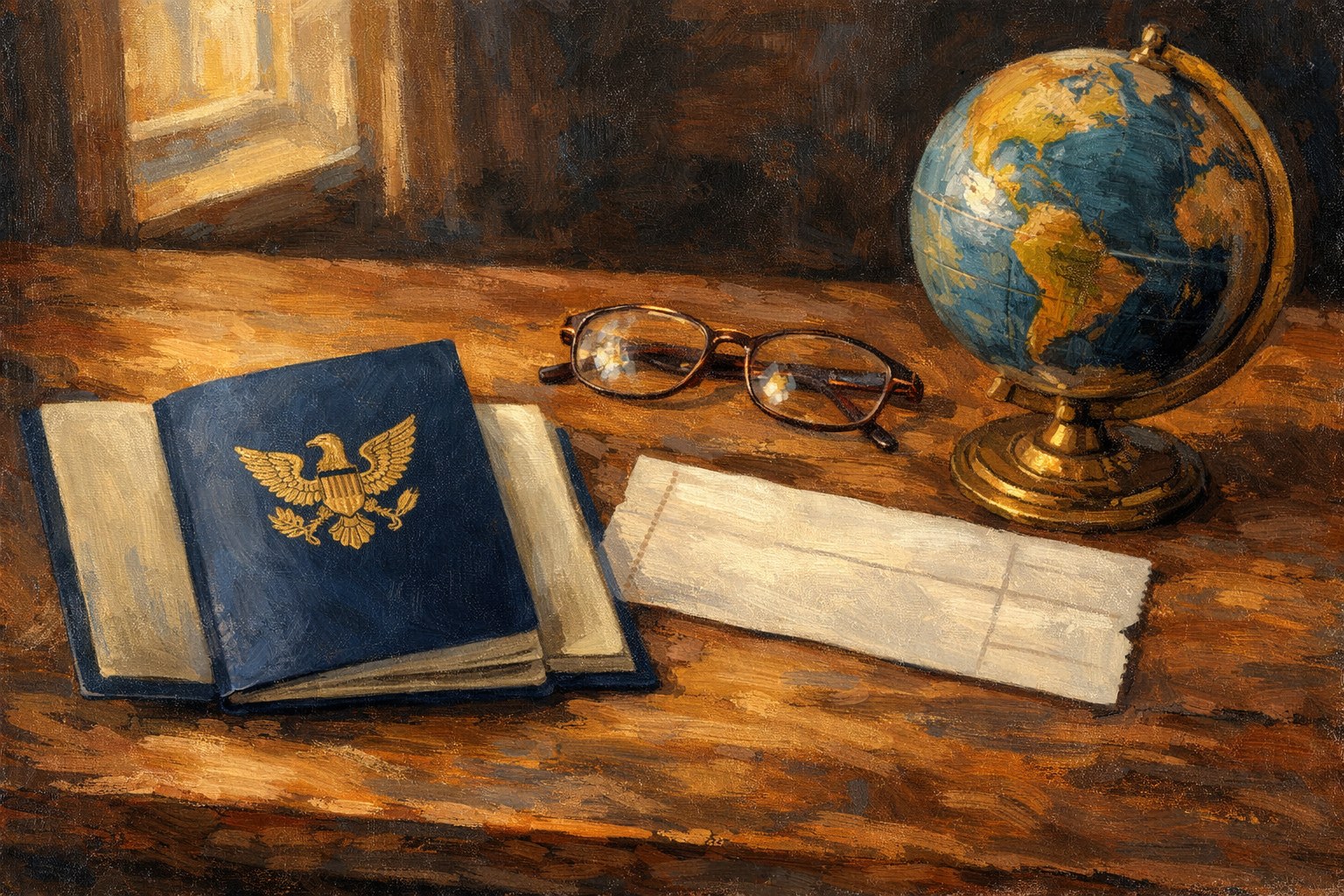
The State Department has issued passports since the early republic, and the Passport Act of 1926 gave it the main authority it uses today. Passports became required for most travel abroad during the world wars, and since 2009 Americans have needed a passport book or passport card to return by land or sea from Canada, Mexico, and the Caribbean. The Bureau of Consular Affairs runs 29 passport agencies and centers, and post offices and other acceptance facilities take first-time applications.
The bureau issued a record 27.3 million passports in fiscal 2025. An adult passport book costs 165 dollars for a first application and lasts ten years. Routine processing took about four to six weeks in 2025, and most adults have been able to renew online since September 2024. A cheaper wallet-sized passport card works only for land and sea travel to nearby countries. Passports are also widely accepted as proof of citizenship and identity at home.
The Supreme Court recognized a right to travel abroad in Kent v. Dulles in 1958, but the government can deny or revoke passports in some cases, including child support debts above 2,500 dollars, seriously delinquent federal tax debts of more than about 65,000 dollars, certain criminal cases, and national security concerns. Since 2017 U.S. passports have been invalid for travel to North Korea without special permission. A January 2025 executive order required passports to show sex at birth and ended the X marker, and the Supreme Court let the policy take effect in November 2025 while a lawsuit continues.





| Status | Active |
| Legal basis | 22 U.S.C. 211a |
| Official site | travel.state.gov |
| Issued by | State Department, Bureau of Consular Affairs |
| Record | 27.3 million issued in fiscal 2025 |
| Adult first-time cost | 165 dollars for a book |
| Online renewal | Since September 2024 |
| Required for | Most international travel and air travel to Canada and Mexico |
| Date | Passport Act of July 3, 1926 |