Public Housing
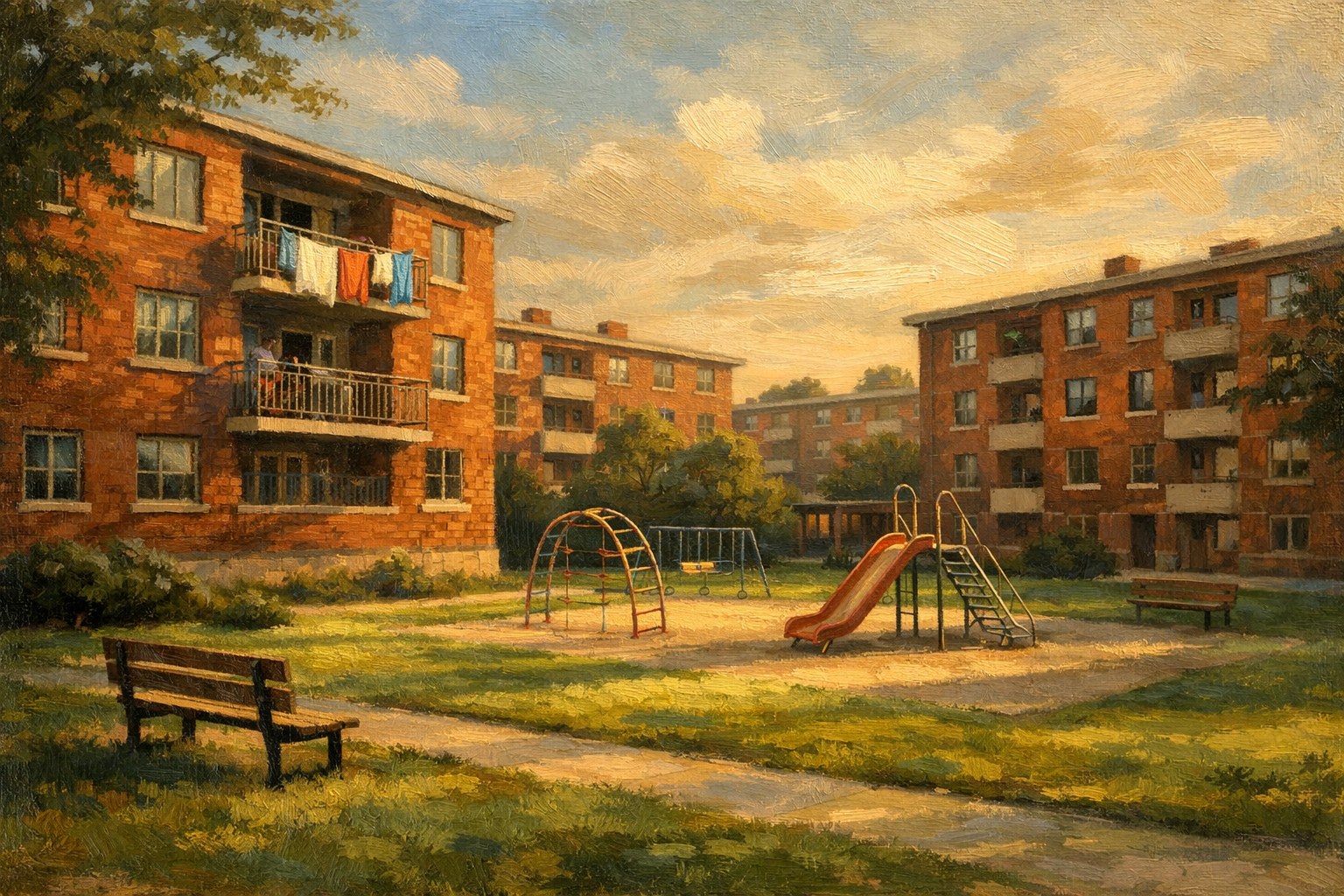
The Housing Act of 1937, part of the New Deal, created public housing to clear slums and house working families, and the Housing Act of 1949 expanded it. Local public housing authorities own and manage the buildings with federal money for construction, operations, and repairs from the Department of Housing and Urban Development. Tenants pay about 30 percent of their income in rent.
Public housing peaked at about 1.4 million units in the early 1990s. Many large high-rise projects, such as Chicago's Cabrini-Green and St. Louis's Pruitt-Igoe, became symbols of concentrated poverty and neglect, and were demolished. The HOPE VI program, starting in 1992, replaced many with mixed-income developments, and a 1998 law, the Faircloth Amendment, capped the number of units at that year's level. About 900,000 units remain, home to roughly 1.6 million people, many of them older adults and people with disabilities.
Decades of underfunding left a repair backlog estimated at 70 billion dollars or more, and problems such as lead paint, mold, and broken heat have led to lawsuits and federal monitors in cities including New York. Since 2012 the Rental Assistance Demonstration has let housing authorities convert units to private or nonprofit management with long-term federal contracts in order to borrow for repairs. Supporters of conversion say it saves the buildings, while critics worry about tenant protections and the loss of public ownership.
| Status | Active |
| Legal basis | 42 U.S.C. 1437 and following |
| Official site | hud.gov |
| Created | Housing Act of 1937 |
| Units today | About 900,000 |
| Peak | About 1.4 million units in the early 1990s |
| Unit cap | Faircloth Amendment, 1998 |
| Repair backlog | Estimated at 70 billion dollars or more |
| Date | Created by the Housing Act of 1937 |