Civil Asset Forfeiture
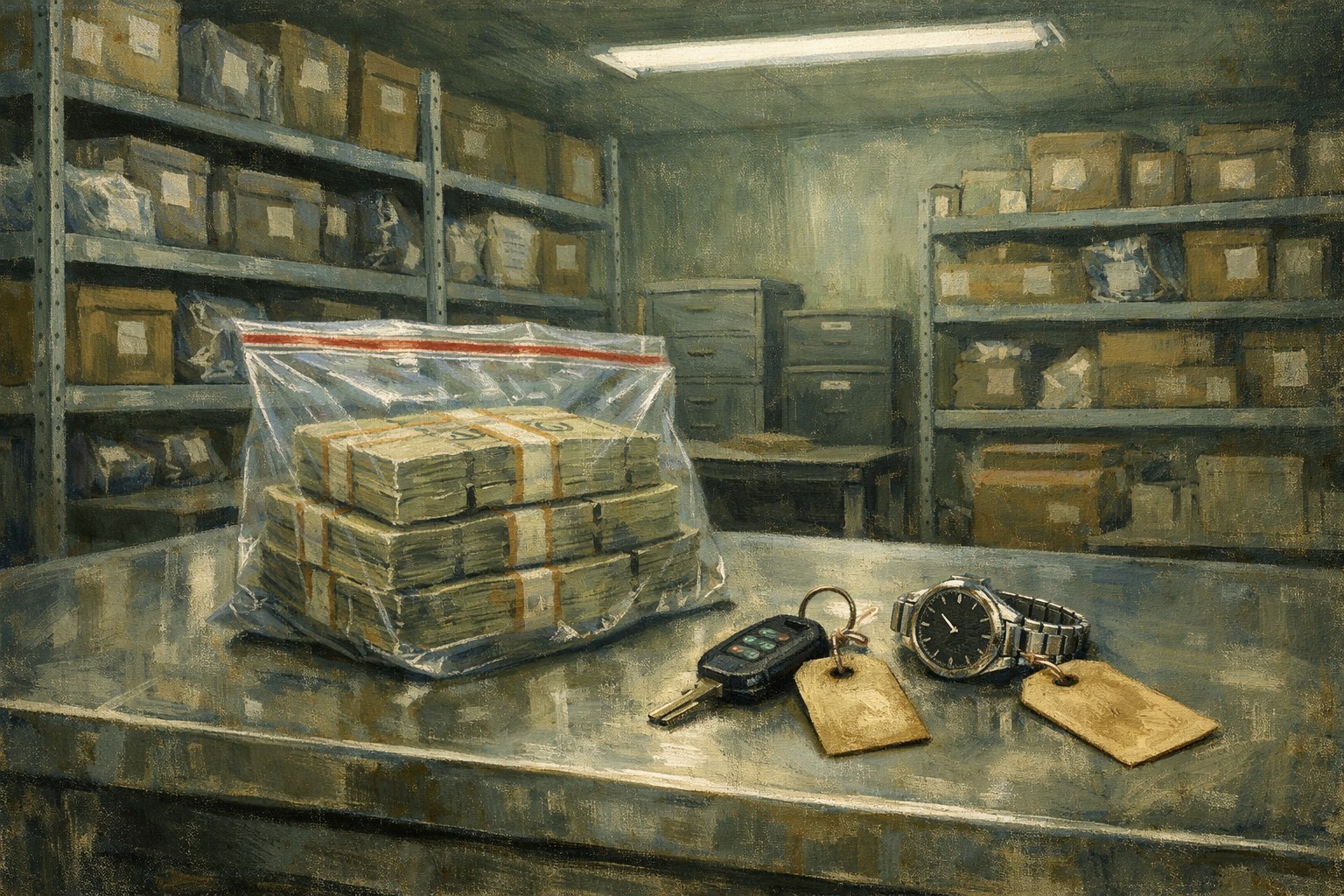
In civil forfeiture, the government sues the property itself, rather than the owner, on the theory that it was used in or came from a crime, which produces case names like United States v. 92,000 Dollars in Cash. Its roots lie in old admiralty law against pirate and smuggling ships, and its modern use grew with the war on drugs. The Comprehensive Crime Control Act of 1984 let federal agencies keep forfeited money in a fund and share up to 80 percent with state and local police who help, a program called equitable sharing.
Criminal forfeiture happens only after a conviction, but civil forfeiture requires no criminal charge, and owners must go to court to get their property back, often spending more on lawyers than the property is worth. The Civil Asset Forfeiture Reform Act of 2000 raised the federal standard of proof and created an innocent owner defense. Federal and state governments have taken tens of billions of dollars this way since 2000, according to the Institute for Justice. The Supreme Court ruled in 2019 that the Eighth Amendment's ban on excessive fines limits state forfeitures, but in 2024 declined to require a quick hearing after a car is seized.
Federal policy has shifted with administrations, with the Justice Department limiting adoption of state seizures in 2015 and restoring it in 2017. More than 30 states have changed their laws, and New Mexico, Nebraska, and Maine have largely replaced civil forfeiture with criminal forfeiture after conviction. Prosecutors and police say forfeiture takes the profit out of drug trafficking and fraud and returns money to victims, while critics on the left and right say it lets agencies profit from seizures and falls hardest on people who cannot afford to fight back.





| Status | Active |
| Legal basis | 18 U.S.C. 981 and 983, 21 U.S.C. 881 |
| Official site | justice.gov |
| Federal sharing program | Since 1984, up to 80 percent to local police |
| Federal reform law | Civil Asset Forfeiture Reform Act of 2000 |
| Key cases | Timbs v. Indiana (2019), Culley v. Marshall (2024) |
| States that largely ended it | New Mexico, Nebraska, Maine |
| Federal administrator | Justice Department Asset Forfeiture Program |
| Date | Federal equitable sharing since 1984 |