Controlled Substances Act CSA
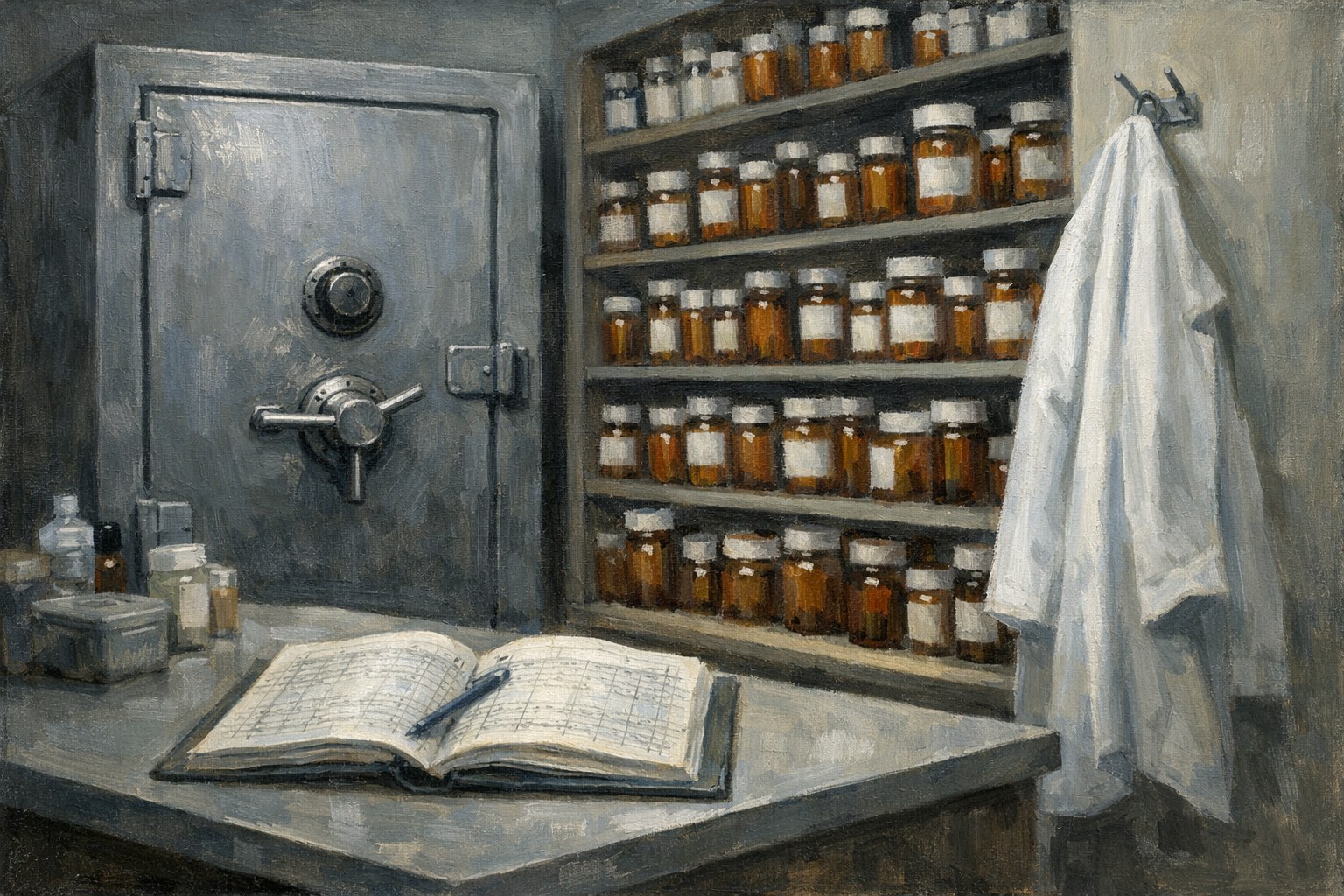
President Richard Nixon signed the Comprehensive Drug Abuse Prevention and Control Act on October 27, 1970, and its Title II, the Controlled Substances Act, replaced a patchwork of earlier drug laws. It places drugs in five schedules. Schedule I drugs, such as heroin and LSD, are considered to have a high potential for abuse and no accepted medical use. Schedules II through V cover drugs with accepted medical uses and decreasing abuse potential, from fentanyl and oxycodone in Schedule II to cough medicines with small amounts of codeine in Schedule V.
The schedule determines who may make, prescribe, and dispense a drug, the records required, and the penalties for illegal trafficking. Manufacturers, distributors, pharmacies, and doctors who handle controlled substances must register with the Drug Enforcement Administration. The Anti-Drug Abuse Act of 1986 added mandatory minimum prison sentences tied to drug quantities, including a 100 to 1 disparity between crack and powder cocaine that the Fair Sentencing Act of 2010 reduced to 18 to 1.
The Supreme Court held in Gonzales v. Raich in 2005 that Congress can ban even homegrown marijuana under the Commerce Clause, so federal law applies in states that have legalized it. Critics say the scheduling system is slow and political, kept marijuana alongside heroin for decades, and helped drive mass incarceration. Supporters say it gives a consistent national framework for controlling dangerous drugs. Congress and agencies have repeatedly added new synthetic drugs, including permanently placing fentanyl-related substances in Schedule I in 2025.


| Status | Active |
| Abbreviation | CSA |
| Legal basis | 21 U.S.C. 801 and following |
| Official site | dea.gov |
| Signed | October 27, 1970 |
| Schedules | Five, from I (no accepted use) to V |
| Enforced by | Drug Enforcement Administration |
| Key case | Gonzales v. Raich (2005) |
| Fentanyl analogs | Permanently Schedule I since 2025 |
| Date | Signed October 27, 1970 |